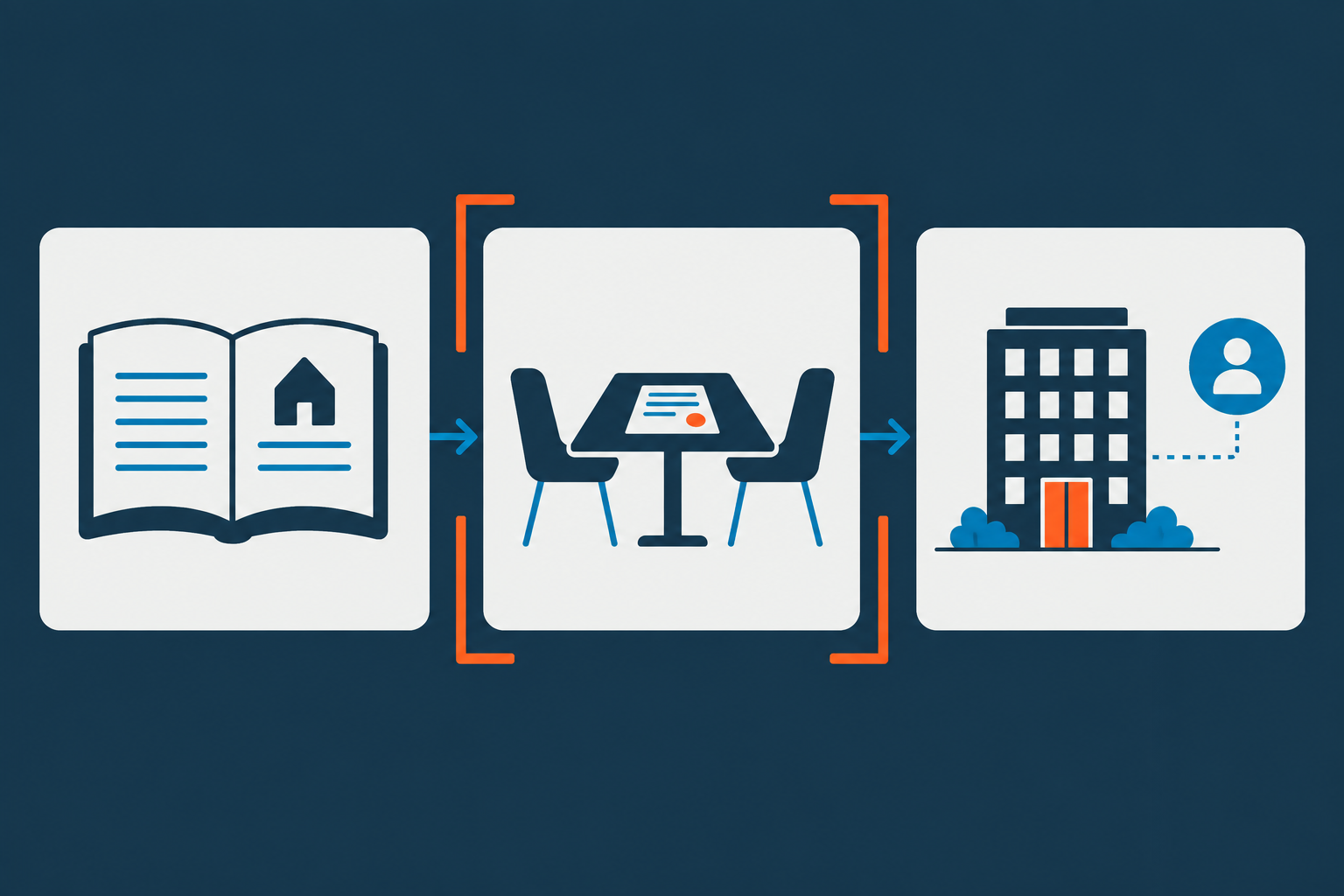
A done-with-you short-term rental consulting program is one where you keep ownership of the decisions and the execution, and the consultant supplies sequence, review and accountability on your specific deal. It sits between a self-directed course, where you get information and no feedback, and done-for-you management, where someone else runs the portfolio and you own the outcome without the competency. It is the right model if you intend to operate the business yourself, and the wrong one if you want passive exposure.
I have spent 18+ years in real estate, focused on short-term rentals since 2016, and worked with more than 10,000 operators. This article explains what each model actually delivers, what it costs to judge fairly, and the test I would apply to any program — including mine — before paying for it.
What "Done-With-You" Actually Means
In a done-with-you engagement, you do the work. You screen the market, make the calls, negotiate the lease or the purchase, build the listing, hire the cleaner, and file the tax paperwork. The consultant's job is narrower and more specific: put the steps in the right order, review your numbers before you commit, and stop the errors that cost five figures.
Three things separate it from a course:
Your deal, not a generic example. The underwriting reviewed is your spreadsheet, on your unit, in your city.
A response loop. You can bring a stuck decision and get an answer within days, not by re-watching a module.
Accountability with a calendar. Scheduled sessions create a deadline, which is the actual reason most people move.
What it is not: a guarantee, a shortcut around licensing, or a substitute for reps. Nobody can transfer the judgment that comes from watching your own occupancy sag in a slow week.
The Three Service Models, Side by Side
Model | What you buy | What you keep | Where it fails | Typical fit |
|---|
Self-directed (courses, podcasts, communities) | Information and sequence | All decisions and all mistakes | No feedback on your numbers; slow, expensive learning by error | Time-rich, analytical, high tolerance for trial and error |
Done-with-you consulting | Sequence, deal review, accountability | Full operating competency and control | Wasted if you have no deal in motion or will not do the work | Capital available, time limited, intends to operate |
Done-for-you management | Execution by someone else | Cash flow, not competency | You cannot evaluate a manager whose job you have never done | Capital-heavy, time-poor, wants exposure without operations |
The trap in this table is the middle column. Self-directed learning looks cheapest and often is not, because a single bad entry — an over-market lease, a saturated submarket, a city where your permit will not be approved — is a five-figure category of mistake in most markets. Done-for-you looks easiest and often is not, because judging a manager requires the operational knowledge you skipped buying.
What a Real Done-With-You Engagement Includes
Ask any program to show you these six components. Missing two of the six means you are buying a course with calls attached.
1. A diagnosis before a plan. Where you are, what capital and time you have, what your market allows, and what your constraint actually is. A program that sells you the same plan as everyone else did not diagnose anything.
2. Market and regulatory screening. Written confirmation of the licensing position before you sign anything. Short-term rental rules are local and change locally; city licensing pages, not forums, are the source.
3. Underwriting review on your numbers. Your revenue assumptions, your expense lines, your reserve. The review should be able to kill your deal, or it is not a review.
4. Operational system build. Turnover standard, guest message set, pricing cadence, bookkeeping structure with a lodging-tax calendar. These are the systems that separate similar portfolios with very different profits.
5. A response channel with a stated time. "Ask anything" is not a service level. "Answered within two business days" is.
6. Documentation you keep. Checklists, models and SOPs that remain yours when the engagement ends. If nothing durable transfers, you rented motivation.
What It Costs, and How to Judge the Price
Prices in the STR education and consulting market move constantly and vary by provider, so judge them against the mistake being avoided rather than against a sticker number someone quotes on a webinar.
Spend level | What should be included at that level | Red flag at that price |
|---|
Free | A diagnostic conversation, published guides, primary-source pointers | Being pushed to enroll in the same call |
Hundreds | One narrow artifact: a model, a template pack, a single-topic session | An upsell ladder that is the real product |
Low thousands | Full sequence, working underwriting model, compliance research method, direct review | Income screenshots instead of artifacts and update dates |
High thousands and up | Named operator access, live deal review, scheduled accountability | You do not yet have a deal to review |
At CashFlow Diary, the entry point is a complimentary one-on-one diagnostic call, and the paid action plan that can follow it is $997. Anything beyond that is scoped against a specific deal, because pricing a consulting engagement before diagnosing the constraint is how people end up paying for the wrong help.
Two questions expose most programs in about a minute: How many units are you personally responsible for this month? and When was this curriculum last updated? Vague answers to either are your answer. And be skeptical of any earnings or income claim in this market — the Federal Trade Commission's business guidance is explicit that such claims must be substantiated, so ask for the basis in writing.
Who It Fits, and Who Should Not Buy It
A done-with-you program is a strong fit if you plan to operate the business yourself, you have a deal or a decision in motion within roughly 90 days, you have capital to protect, and you will do the homework between sessions.
It is a poor fit if any of these are true:
You are still deciding whether you want this business at all. Free content answers that question for free.
You want the portfolio run for you. That is management, and it is priced as a share of gross revenue, commonly 20–30% in many markets.
You have no reserve. Coaching cannot replace operating cash, and the most common reason operators quit is running out of reserve before the listing stabilizes.
You want certainty. Regulation, financing and platform ranking all shift; a program can improve your odds and cannot remove the risk.
Turning away a poor fit is part of the job. An enrollment that should not have happened produces a refund request, a bad outcome, and a story that discourages the next person.
How to Evaluate Any Program: A Five-Step Process
Write your constraint in one sentence. "I cannot get a landlord to say yes" is a constraint. "I want to scale" is not.
Ask for one artifact. The underwriting model, the compliance checklist, or the message sequence. Look at it before you discuss price.
Verify the operator is current. Units they are responsible for this month, and the last curriculum update date.
Confirm the service level in writing. Session cadence, response time, what happens if you fall behind, and what documentation you keep.
Check the exit. Refund terms, cancellation window, and whether the price is scoped to a deliverable rather than to a time block.
Run all five before paying. Any program worth its fee will pass them without friction, and the ones that resist step two have told you what you needed to know.
If you want the diagnosis part without buying anything, book a complimentary one-on-one diagnostic call and we will name your constraint and the next action — including when the answer is "you do not need a program yet."
Frequently Asked Questions
What does done-with-you consulting mean?
It means you execute and the consultant supplies sequence, review and accountability on your specific situation. You make the calls, sign the documents and run the operations; the consultant orders the steps, reviews your underwriting before you commit, and holds you to a schedule.
How is done-with-you different from a course or from done-for-you management?
A course gives information with no feedback on your numbers. Done-for-you management hands execution to someone else and leaves you without the competency to judge them. Done-with-you keeps control and competency with you while removing the expensive early mistakes.
How much does STR consulting cost?
Prices vary widely by provider and move constantly, so match spend to the mistake you are avoiding rather than to a sticker price. At CashFlow Diary the diagnostic call is complimentary and the paid action plan is $997; larger engagements are scoped against a specific deal. Treat any program's earnings claims with caution and ask for substantiation.
Is done-with-you consulting worth it for a first-time operator?
It can be, if you have a decision in motion and capital at risk within about 90 days. If you are still deciding whether you want the business, free content and primary sources are the better first spend, because coaching you are not ready to act on becomes another reason to delay.
What should I ask before paying for any STR program?
Ask how many units the instructor is personally responsible for this month, when the material was last updated, what response time you are promised in writing, what documentation you keep afterward, and what the refund terms are. Vague answers on any of the five are a reason to pass.
Can consulting guarantee my short-term rental will be profitable?
No, and a program that implies otherwise is a warning sign. Licensing, financing and platform behavior change, and outcomes depend on your execution and your market. What consulting can reliably do is stop specific, known categories of costly error.
Related Reading
Keep reading:
Your next action: write your constraint in one sentence today, then ask any program you are considering to show you the one artifact that addresses it.
Sources