You can get paid back for guest damage on Airbnb if you file the claim in the right order and on time. An Airbnb damage claim has two stages. First, ask the guest to pay through the Resolution Center within 14 days of checkout, with photos, estimates or receipts attached. The guest gets 24 hours to respond. If they decline, ignore it or pay only part, ask Airbnb to step in under Host damage protection. That part of AirCover for Hosts reimburses up to $3 million for eligible guest damage and pays no more than the depreciated value of ordinary furnishings.
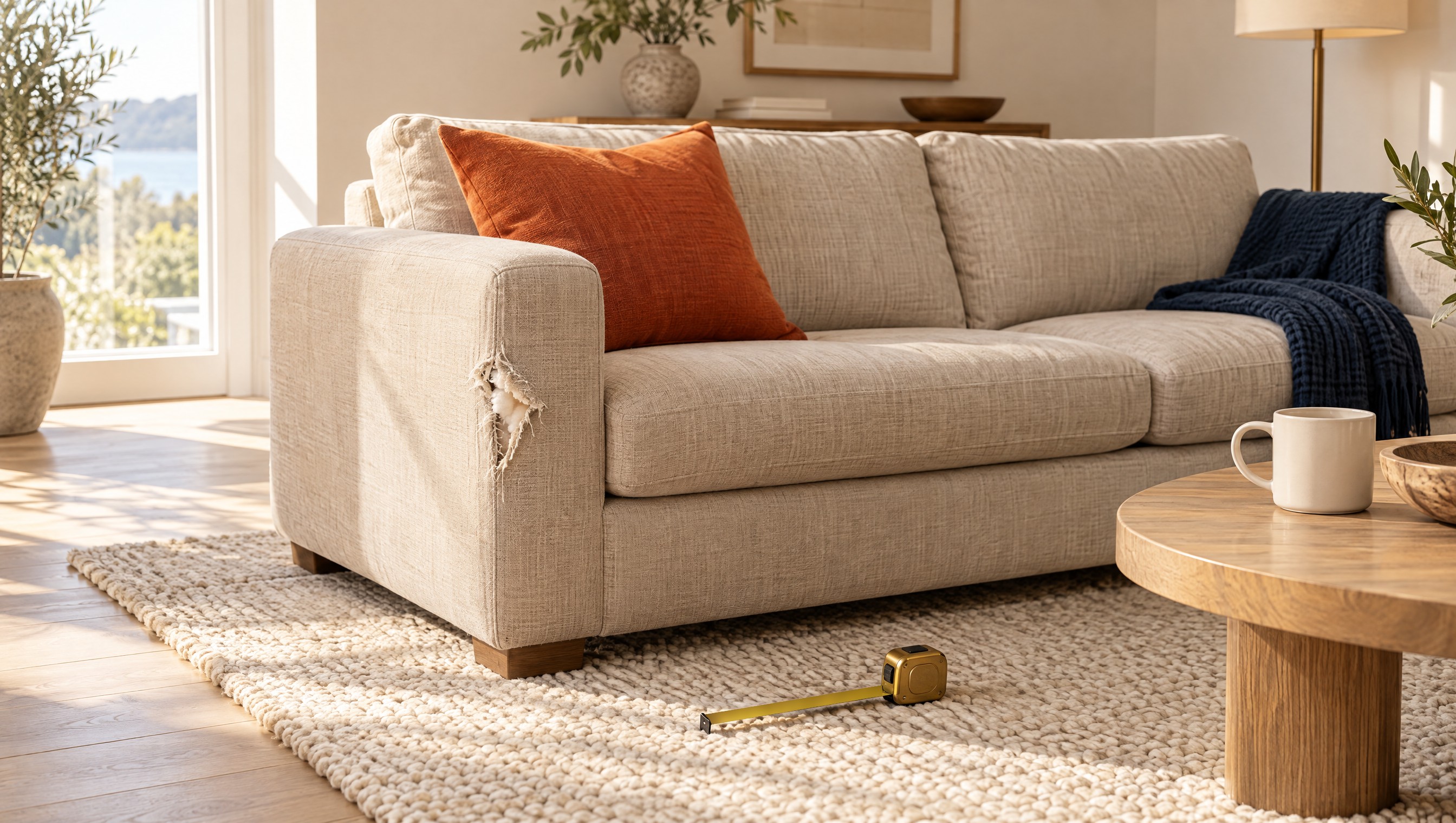
Say a guest's dog chewed the sofa, the rug needs a professional cleaning, and the guest won't answer your message. Airbnb's deadlines run from checkout or from the damage itself, so they can run out before the cleaner's invoice arrives. This guide walks through the filing steps, the deadlines, what AirCover for Hosts covers and excludes, the evidence file Airbnb's terms ask for, and how the payout is calculated.
How to File an Airbnb Damage Claim, Step by Step
Airbnb's reimbursement process starts with a payment request to the guest. Its Host damage protection terms say Airbnb guarantees the guest's obligation to pay, so it only pays when the guest does not. The steps below come from Airbnb's help center and its Resolution Center instructions.
Document the damage before anything is repaired or cleaned. Airbnb's help page asks for photos or videos plus repair or cleaning estimates and receipts. Shoot wide and close, with the room in frame so the location is obvious.
Open a money request in the Resolution Center. On desktop, click Resolution Center, then Request money, select the reservation and click Choose.
Pick the reason, enter the amount and attach your evidence. Airbnb's form asks you to choose what the request is for, enter the amount, upload optional attachments and add a note. Use the note to explain what happened and why this guest is responsible.
Wait 24 hours for the guest. Airbnb's help center gives the guest 24 hours to respond. They can pay in full, pay a different amount or decline.
Involve Airbnb if the guest does not pay in full. If the guest declines, pays partially or does not respond, you can submit a reimbursement request under Host damage protection. The terms require that payment request form, with your evidence, within 30 days of checkout. Airbnb Support then reviews it. For listings in Washington state, Airbnb's insurer reviews the request instead.
Review the result. Some requests are reviewed automatically to speed up outcomes. Airbnb says you can request a human review and add evidence if you do not accept the automated result.
Sign the approved payment agreement. If Airbnb approves the request in whole or in part, its terms require you to sign an Approved Payment Request Agreement before payment.
A co-host can do this for you. Airbnb's Resource Center says a co-host with full-access permissions can submit a reimbursement request on the host's behalf and track it through payout.
The Deadlines That Decide Your Claim
An Airbnb damage claim runs on several deadlines, and missing one can end the claim. Airbnb publishes five clocks for damage and money requests, and they do not all start at the same moment.
Clock | Window | Starts |
|---|
Guest request | 14 days | Checkout |
Guest reply | 24 hours | Your request |
Airbnb form | 30 days | Checkout |
Support docs | 14 days | Damage date |
Other requests | 60 days | Checkout |
The first row is the one in the Host damage protection terms: within 14 days of the guest's checkout date, you must explain why the guest is responsible, ask them to pay and notify Airbnb of your complaint. Filing the request through the Resolution Center satisfies those steps if the request covers all of them.
The third row is also in the terms: if the guest does not pay, the Host damage protection payment request form and its evidence are due within 30 days of checkout.
The fourth row comes from Airbnb's Host damage protection help page, which says that if you want Airbnb Support involved, you must do so and submit supporting documentation within 14 days of the damage or loss. Damage happens during the stay, so that date can land before checkout. The safe working rule is to file as soon as you find the damage and treat the earliest date as your deadline.
The last row covers a different kind of request. Airbnb allows Resolution Center money requests in general up to 60 days after checkout, but its help center carves out damage-related claims, which need to be filed within 14 days of checkout. A host who remembers "60 days" from a refund request can miss a damage claim by six weeks.
If guest damage keeps eating into your margins and you want a second set of eyes on your house rules, fees and cleaning setup, book a complimentary one-on-one diagnostic call and we will go through the numbers with you.
What AirCover for Hosts Covers in a Damage Claim
AirCover for Hosts is a bundle, and only one piece of it pays for damage a guest causes to your place. Airbnb lists guest identity verification, reservation screening, $3 million Host damage protection, $1 million Host liability insurance and a 24-hour safety line. Airbnb says it is included free whenever you host.
Host damage protection covers, per Airbnb's help page:
Damage to your home, furnishings, valuables or belongings caused by guests or their invitees
Damage to parked cars, boats or other vehicles caused by guests or their invitees
Extra cleaning to remove guest stains, pet accidents or smoke odor, or when unapproved extra guests make it necessary
Income lost when you must cancel confirmed Airbnb bookings because of guest damage
It does not cover:
Not paid | Case |
|---|
Wear and tear | Aging furniture |
Acts of nature | Storms, quakes |
Guest injuries | Liability cover |
Routine cleaning | Laundry, trash |
Lost cash | Currency |
The terms add more exclusions. Mold, mildew and other microorganisms are excluded even when a guest caused the underlying damage. So are losses caused after the stay ended, gradual deterioration, faulty workmanship, and damage from insects or vermin. Pets themselves are ineligible property, though damage a guest's pet causes to your property is covered.
Two more limits sit in the eligible-property rules of the terms. Consumables such as toiletries, coffee and paper products are covered only if you clearly marked them as unavailable, for example locked away or listed as off-limits in your House Rules. Security cameras and other recording devices are ineligible unless they conform with Airbnb's community standards and policies.
Host damage protection also does not apply to stays in Japan, where Japan Host Insurance applies, or to stays offered through Airbnb Travel, LLC.
The Evidence File Airbnb's Terms Ask For
Airbnb's terms spell out what "legitimate and verifiable evidence" means, and a thin file gives Airbnb grounds to deny the request. Section 3 of the Host Damage Protection Terms lists what a reimbursement request must include:
The time, cause and origin of the loss, backed by receipts, photos, videos or documents
A complete inventory of damaged or missing items with make and model, purchase date, condition at the time of loss and estimated repair or replacement cost, with receipts that justify the figures
Detailed repair estimates for damage to real property, such as the building
Receipts or invoices for extra cleaning
Proof that you own the property or are legally responsible for it
A police report, if the loss came from theft or another criminal act
Smoke odor claims need more. The terms ask for evidence that the guest or an invitee caused the smell, such as photos, a professional assessment, smoke detector readings or the guest admitting they allowed smoking against your House Rules. Airbnb may also require the cleaning invoice to come from an independent third party it approves.
Three other rules shape the file. You must protect damaged property from further loss and let Airbnb or its designee inspect it. Filing a request gives Airbnb consent to review your Airbnb messages with that guest, previous guests and Airbnb itself. And the terms warn that documents doctored or falsified in any way, including with artificial intelligence, can get the request denied, with fraud handled under a separate section.
That messaging consent is a reason to keep guest communication on Airbnb. A clear, polite message thread showing the house rule, the problem and your request puts the record a reviewer will read in one place. Our guest message templates cover the wording.
How Much Airbnb Pays: Actual Cash Value and Offsets
A $3 million limit does not mean replacement at full retail. For property without a special rule, such as furniture and fixtures, Airbnb's terms pay the lesser of several amounts: actual cash value, the cost to repair, or the cost to rebuild or replace with like kind and quality. Actual cash value (ACV) is replacement cost minus depreciation and obsolescence, measured on the date of the incident.
Three more rules shrink the number:
Cleaning only counts above your cleaning fee. The terms pay extra cleaning only in excess of the cleaning fees you charged. Our cleaning fee guide covers how to set that fee.
Other money comes off first. Anything you already received for the same loss, from your own insurance, a security deposit or the guest, reduces the payout.
The guest's liability is the ceiling. Airbnb will not pay more than you could recover from the guest.
Here is a hypothetical example. Every figure below is invented to show the math. A guest brings a dog to a no-pets listing. The dog chews through a sofa that would cost $1,500 to replace new, and has an accident on a rug that needs a $260 professional cleaning. The booking carried a $150 cleaning fee. The guest pays $200 through the Resolution Center and declines the rest. Assume the sofa can't be repaired and the reviewer values the three-year-old sofa at $900 actual cash value.
Line | Amount | Basis |
|---|
Asked of guest | $1,760 | Sofa new + rug |
Sofa allowed | $900 | Lesser: ACV |
Rug allowed | $110 | $260 less fee |
Less guest paid | -$200 | Offset |
Airbnb pays | $810 | Remainder |
In this hypothetical, the host recovers $1,010 in total ($900 for the sofa plus $110 for the rug). Airbnb's $810 is that total minus the $200 the guest already paid. The host ends up $750 short of the original ask, and Airbnb suggests hosts also carry personal insurance for guest damage its program does not pay.
If you rent the unit under a lease, read one more clause. Real property owned by someone else that you do not control is ineligible, and when an approved payment involves property owned by a third party, Airbnb may pay that owner directly. Our rental arbitrage insurance guide covers who should insure what on a leased unit.
Damage Protection, Liability Insurance and Your Own Policy
Host damage protection and Host liability insurance are separate programs with separate filing paths. Airbnb says so directly, and mixing them up sends a claim to the wrong place.
Cover | Pays for | File via |
|---|
Damage | Your place | Resolution Center |
Liability | Guest injury | Intake form |
Own policy | Gaps | Your insurer |
Host damage protection is not insurance. Airbnb's terms call it a guarantee of the guest's obligation to pay. Host liability insurance is underwritten by third-party insurers and covers up to $1 million if you are found legally responsible for a guest or someone else being hurt, or for their property being damaged or stolen. Airbnb says co-hosts and cleaners who help you host are included. To file, you complete Airbnb's liability intake form and a representative from the insurer handles the claim.
Airbnb also says AirCover for Hosts is not a substitute for personal insurance and suggests buying your own coverage for guest damage it does not protect. For a policy-by-policy breakdown, read our STR insurance guide.
Why Claims Get Denied or Cut
Airbnb's terms give it several clear grounds to reduce or deny a request. Each one below comes from the terms or Airbnb's help pages.
Missed deadline. The terms require the guest request within 14 days of checkout.
No guest request first. Airbnb only considers your request after you have asked the guest to pay.
Excluded cause. Wear and tear, mold, storms and routine cleaning sit outside the program.
Repeat losses. The terms say Airbnb may deny a request where the loss came from your failure to take reasonable care, and name repeat requests for the same type of loss in the same listing as possible evidence.
Evidence it cannot verify. Airbnb may ask for more documents, a different format, or third-party documentation, or deny the request.
Unmarked consumables. Supplies left out for guests are not eligible property.
If an automated review result looks wrong, Airbnb's help page lets you request a human review and add evidence. For hosts based in the United States, a legal claim against Airbnb falls under Section 12 of the terms: an informal negotiation first, then binding individual arbitration, with small claims court as an alternative.
A Setup Checklist That Makes the Next Claim Easier
Several parts of a damage claim's evidence file can be prepared before the guest arrives. Each item below maps to a requirement in Airbnb's terms or help pages:
Keep a dated photo inventory of each room at every turnover, so you can show the condition before the stay.
Store purchase receipts by listing. The inventory section asks for purchase dates and receipts.
Write pets, smoking and guest-count rules into your House Rules. Smoke odor cleaning is eligible only when the smoking broke your House Rules, and some pet cleaning claims depend on the pet breaking them too.
Lock away or label any supplies guests should not use. Unmarked consumables are not covered.
Check that any outdoor camera or noise monitor follows Airbnb's policies. Nonconforming devices are ineligible property.
Put the deadline on your turnover checklist. Your cleaner should report damage the day they find it, with photos.
For the guest conversation and the repair side after you find damage, see what to do when a guest damages your property.
Frequently Asked Questions
How long do I have to file an Airbnb damage claim?
Request payment from the guest in the Resolution Center within 14 days of their checkout. Airbnb's help page also says to involve Airbnb Support and submit documentation within 14 days of the damage, and the terms give you 30 days from checkout to file the Host damage protection request form if the guest does not pay, so file as soon as you find it.
What does AirCover cover when a guest damages my home?
Host damage protection, the damage part of AirCover for Hosts, covers guest-caused damage to your home, furnishings, valuables and belongings, damage to parked vehicles, extra cleaning for stains, pet accidents or smoke odor, and income lost when you cancel confirmed Airbnb bookings because of the damage. It excludes wear and tear, acts of nature, guest injuries and routine cleaning.
Does Airbnb pay full replacement cost for damaged furniture?
Not always. For property without a special rule, such as furniture, the terms pay the lesser of actual cash value, repair cost or replacement cost, and actual cash value deducts depreciation. Payments you already received for the same loss reduce the amount.
Can my co-host file the damage claim?
Yes, if they have full-access permissions. Airbnb's Resource Center says a co-host with full access can submit a reimbursement request on your behalf and track it through payout.
What happens if the guest pays part of the damage?
You can submit the unpaid balance as a Host damage protection request. Airbnb deducts what the guest paid before calculating its share.
Sources
This article is for educational purposes only and is not legal or insurance advice. Airbnb's AirCover programs, terms and deadlines change; check the current Host Damage Protection Terms and talk to your own insurer before you rely on this guide.