
The 2026 FIFA World Cup ran from June 11 to July 19, 2026, and the New Jersey towns closest to MetLife Stadium spent the spring banning short-term rentals rather than licensing them. The tournament has now come and gone, and the result is the one operators should have expected: bans reroute lodging demand, they rarely remove it. Here is what the Mountainside ordinance actually said, why a 31-day reservation sat outside its definition, why "ordinance-compliant" never meant "tax-free" in New Jersey, and the underwriting rule the whole episode confirmed.
Mountainside's Airbnb Ban and the 31-Day Workaround: What the 2026 World Cup Proved
More than 75 New Jersey municipalities banned short-term rentals before the 2026 World Cup. Bans reroute demand; they rarely remove it. Here is the 31-day math, the occupancy-tax trap it does not solve, and the underwriting rule the tournament confirmed.
By J. MasseyMay 19, 2026· 11 min read
Disclosure: This post may contain affiliate links. If you purchase through our links, we may earn a commission at no extra cost to you. We only recommend tools and services J. Massey's team actually uses. Read the affiliate disclosure
Table of Contents
What Happened in the Spring of 2026
In May 2026, the Mountainside Borough Council took up an ordinance banning residential rentals of 30 days or fewer. Local New Jersey coverage at the time put the introduction on May 14, 2026, the penalty at up to $2,000 per day, and the second reading in early June, roughly a week before kickoff; the same coverage reported that Kearny, a few miles from the stadium, had expanded its older short-term rental ordinance that spring to reach more residential dwelling types. Treat all of those figures as press reporting, not as text I read in an adopted code.
One honest caveat before anything else: as of September 21, 2026, I could not confirm on the Borough of Mountainside's published code portal what the final adopted text looks like, or whether amendments followed the June hearing. What I can verify is the code portal itself and the fact that the ordinance was introduced in May 2026. If you own in Mountainside or Kearny, pull the adopted ordinance from the clerk directly. Do not underwrite off a news summary, including this one.
The count that circulated through the spring — more than 75 New Jersey municipalities prohibiting short-term rentals outright — also came from a regional newspaper group rather than a state registry, and I could not reproduce it from a primary source. New Jersey has no statewide short-term rental statute, so the map is a patchwork of borough and township decisions that change on a council vote.
That was the news cycle. It was not the story.
Bans Reroute Demand, They Do Not Delete It

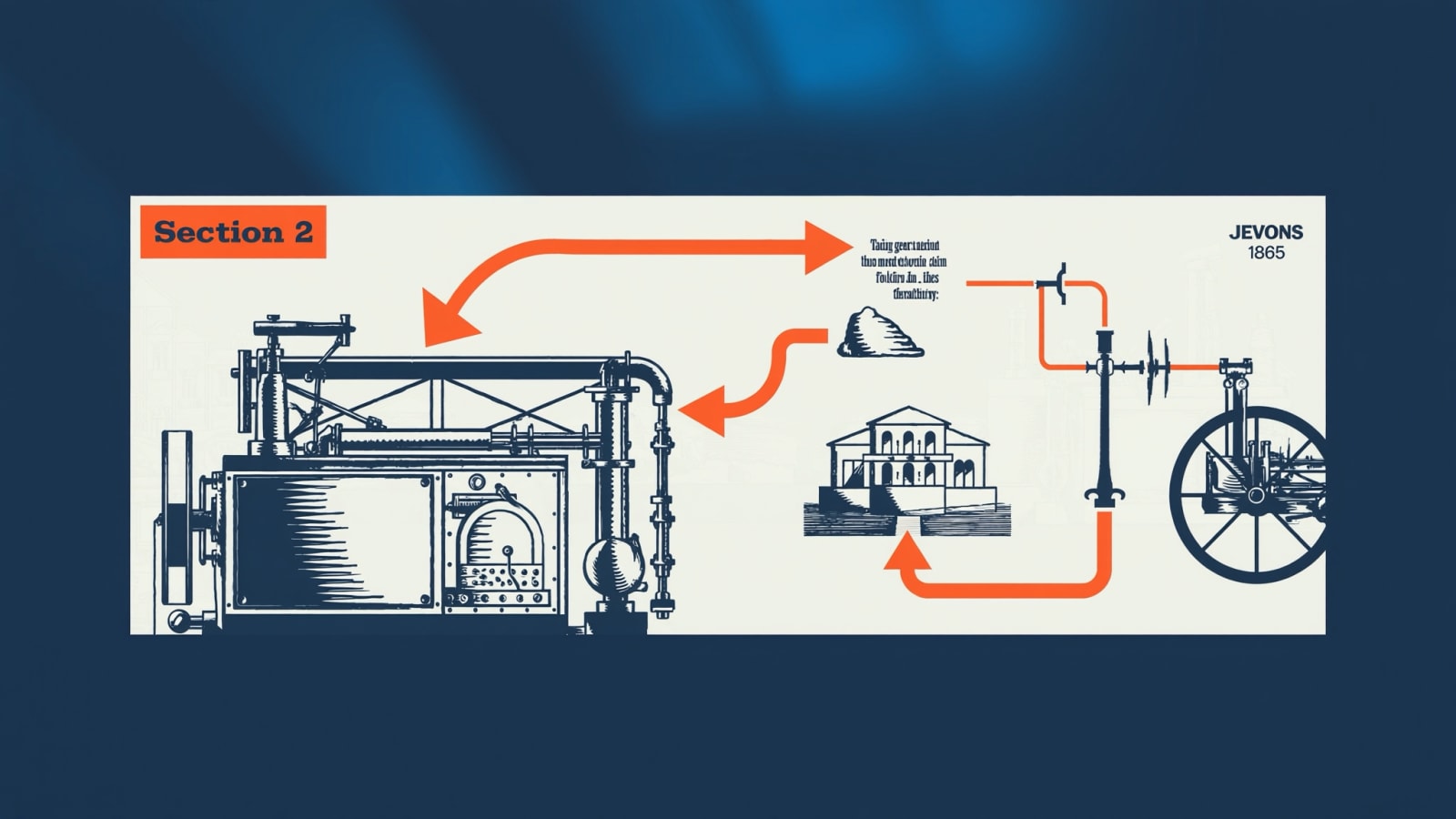
In 1865, William Stanley Jevons noticed that more efficient steam engines did not reduce British coal consumption. Cheaper coal-per-unit-of-work made coal viable in more applications, and total consumption rose. Change one variable to suppress a behavior and the behavior reroutes. Sometimes it concentrates. It almost never evaporates.
Apply that to a rental ordinance. A rule against stays of 30 days or fewer does not ban travel, does not ban hospitality, and does not stop a visiting fan from sleeping in a house in Union County for five nights in June. It changes the paperwork, and it concentrates demand onto whatever inventory remains compliant: hotels, longer-form stays, neighboring towns, and off-platform arrangements nobody registers anywhere.
"Bans don't stop demand. They reroute it."
— J. Massey · CashFlowDiary
Two separate risks got conflated all spring. Risk one is legal exposure from renting in a town that prohibits it. Risk two is margin compression, which comes from supply, not from law: when a giant event lands, first-time hosts list in volume, and the peak nightly rates people quote in March are not the rates that clear in June. Operators who treated those as one risk made bad decisions in both directions.
The 31-Day Mechanics, and What They Do Not Cover
The mechanical point is simple. If an ordinance defines a short-term rental as a stay of 30 days or fewer, then a 31-day reservation is not a short-term rental under that ordinance. A traveling group that only needs five nights can still book and pay for a 31-day term; the property is occupied for five nights and leased for a month on paper. Guests care about the nights they use. Ordinances care about the term of the agreement.
That is the workaround everyone discovered. Here is the part that got skipped.
New Jersey's Division of Taxation bulletin TB-81R2 (issued December 2019, revised February 2022) defines a "transient accommodation" and then lists what is excluded. One exclusion is "leases of real property with a term of at least 90 consecutive days." So the state's dividing line is 90 days, not 30. A 31-day lease can sit outside a municipal short-term rental ban and still be a taxable transient accommodation for Sales Tax, the State Occupancy Fee, the Meadowlands Regional Hotel Use Assessment, and any municipal occupancy tax that applies.
The bulletin also narrows the picture in ways that matter. Since August 9, 2019, an accommodation is subject to those taxes only if it is obtained through a transient space marketplace or is a "professionally managed unit" — defined as a unit not sharing living or sleeping space with another rental unit, owned or controlled by a person offering two or more other units in the same calendar year. There is also a real estate broker exclusion: private residential property with no maid, room, or linen service where the transaction is executed by a New Jersey licensed broker and the keys are handed over at the broker's offsite location.
Read those two paragraphs together and the practical conclusion is unglamorous. Booking a 31-day stay through a platform does not get you out of transient tax. Structuring a genuine lease through a licensed broker with no hotel services might, and that is a conversation with your own tax advisor and attorney, not a setting you toggle in a listing. This article is information, not tax or legal advice.
Stay length | Typical 30-day ordinance | NJ transient tax (TB-81R2) | Operator read |
|---|---|---|---|
1–30 nights | Prohibited where STRs are banned | Transient: taxable if booked via marketplace or professionally managed | Highest legal exposure; penalties in the reported Mountainside draft ran to $2,000/day |
31–89 days | Outside the STR definition | Still transient: short of the 90-consecutive-day lease exclusion | Ordinance-compliant, not tax-free |
90+ consecutive days | Outside the STR definition | Excluded as a lease of at least 90 consecutive days | Cleanest structure; landlord-tenant law now applies |
Any length, broker-executed, no hotel services | Depends on the local term definition | May fall under the broker exclusion | Requires a licensed NJ broker and offsite key handoff |
One more item the 31-day pivot does not solve: once a stay runs past 30 days, tenancy law starts to matter. A guest who will not leave is a housing court problem, not a platform support ticket. Screening carries the weight that the platform used to carry.
What the Tournament Confirmed About Underwriting
I have spent 18+ years in real estate, focused on short-term rentals since 2016, and trained more than 10,000 operators through CashFlowDiary; the pattern below shows up in every cycle. The tournament produced exactly the pattern that a supply-side reading predicted. Inventory surged in the weeks before kickoff, aggressive early asks got cut, and the operators who did fine were the ones whose numbers already worked in a normal July.
That is the rule worth keeping: event revenue is upside, never baseline. If your pro forma needs a once-a-generation tournament to clear debt service, the underwriting was wrong before the tournament was awarded. The same applies to a Super Bowl, an eclipse, a festival, or a convention. Price the property against its ordinary-week demand, then treat the event window as a bonus line you can lose without changing any decision.
The second confirmation was operational. A market that fills with first-time hosts fills with unscreened bookings, absent damage protection, and policies that do not cover event-driven occupancy. Experienced operators spent that summer competing against people who had never handled a twelve-person party in a four-person house. Discipline mattered more than pricing.
Pre-event underwriting item | Pass | Fail |
|---|---|---|
Debt service coverage without event weeks | Covered by ordinary-season revenue | Requires event premium to break even |
Ordinance status | Adopted text in hand from the clerk, dated | "A news article said it's fine" |
Tax registration | Registered for Sales Tax and occupancy fee before the first booking | Planning to "sort it out after" |
Insurance | Carrier confirmed coverage for the stay length and use in writing | Relying on platform host protection alone |
Guest screening | ID verification, purpose of stay, occupancy cap in the agreement | Instant book, no cap, no written agreement |
Stay length over 30 days | Written lease, tenancy exit path reviewed | Platform reservation only |
Damage protection | Deposit or protection product in place, documented | "The guest seemed fine" |
Neighbor plan | Named contact, noise monitoring, parking rules posted | Complaints reach the council before they reach you |
Seat belts are the closest analogy I trust. Early mandates drew real resistance, then behavior changed, then the rules got adjusted as the evidence came in. Regulation of a new lodging channel is following a similar arc: fast restriction first, revision later, and the revision usually arrives after a town counts what it gave up in lodging tax. That is an analogy, not a forecast, and I am not attaching numbers to it.
How to Verify a Midterm Pivot in Your Own Town: A Five-Step Process
If you are considering shifting from nightly stays to 31-day or longer terms because your municipality restricts short stays, work it in this order.
Get the adopted ordinance text, not a summary. Call or email the municipal clerk, ask for the current adopted chapter governing rentals plus any amendment adopted in the last twelve months, and note the adoption date on the copy you keep.
Find the exact term threshold and the definition it attaches to. Some towns write "fewer than 30 days," some write "30 days or fewer," and some define by transiency or by advertising rather than by nights. A one-word difference moves your minimum stay.
Check the zoning and rental registration chapters separately. A town can permit a 31-day lease under its rental ordinance and still require a certificate of occupancy, an inspection, or a landlord registration before a tenant moves in.
Run the state and county tax question next, using TB-81R2 and the Division of Taxation's registration pages. Decide whether your booking channel makes the stay a marketplace transaction, whether you meet the professionally managed unit definition, and register before the first reservation.
Rebuild the model at the longer term and confirm it with your insurer and attorney. Midterm rates per night are lower than nightly rates, turnover costs drop, and tenancy law enters the picture. If the property only works at nightly pricing, the pivot is not a pivot, it is a hope.
Work those five steps before you list, not after a code enforcement letter arrives. If you want a second set of eyes on a specific property and ordinance, book a complimentary one-on-one diagnostic call and bring the adopted ordinance text with you.
What to Watch Over the Next Two Years
The post-event phase is where the second-order opportunities show up. Towns that banned in the spring of 2026 will publish budgets that no longer contain lodging-related revenue, and residents will ask what the restriction bought them. Some councils will hold the line. Some will move toward permits, caps, and owner-occupancy rules rather than prohibition, which is the regulated middle path a few Hudson County municipalities were already drafting before the tournament.
Track three things in your target markets: whether the ordinance is amended or replaced, whether a registration or permit regime appears, and whether the town starts publishing enforcement counts. A town that publishes enforcement data is a town that has decided to manage the channel instead of pretend it away, and that is usually a better place to own than a town on its first prohibition.
For a related read on how much event demand actually converted, see our earlier look at World Cup booking expectations, and on the longer-stay channel, our guide to listing on Furnished Finder for travel nurse tenants.
Frequently Asked Questions
Does a 31-day reservation get around a 30-day short-term rental ban?
Under an ordinance that defines a short-term rental as a stay of 30 days or fewer, a genuine 31-day term falls outside that definition. Whether that works in your town depends on the exact adopted wording, on zoning and rental registration rules that apply separately, and on whether the agreement is a real lease rather than a nightly booking relabeled. Get the adopted text from your clerk before relying on it.
Is a 31-day stay in New Jersey free of occupancy tax?
No. New Jersey's TB-81R2 excludes leases with a term of at least 90 consecutive days from the transient accommodation definition, so 31 to 89 days is still transient. Whether Sales Tax, the State Occupancy Fee, and related assessments apply also depends on whether the stay was obtained through a transient space marketplace or is a professionally managed unit. This is not tax advice; confirm with your own advisor.
What did the 2026 World Cup prove about event-driven rental income?
That supply responds faster than regulation. Restrictions concentrated bookings rather than removing them, first-time hosts flooded listings near the stadium, and early asking rates compressed. Operators whose numbers worked without the tournament kept the upside; operators who needed it did not get the rates they modeled in the spring.
How do I find out whether my own town bans short-term rentals?
Request the current adopted rental chapter from the municipal clerk and check the zoning ordinance for any separate use restriction. Do not rely on the platform: listing sites generally do not block listings in towns that prohibit them, and the compliance burden stays with the host.
What changes operationally when I move from nightly stays to 31-day terms?
Screening, documentation, and exit rights. A stay past 30 days can create tenancy protections, so you want a written lease, an occupancy cap, verified identity, and insurance confirmed in writing for that stay length and use. Turnover costs fall, nightly rate falls, and the failure mode shifts from a bad review to a housing court filing.
Related Reading

Sources
New Jersey Division of Taxation — TB-81R, Taxes Imposed on the Rental of Transient Accommodations — Supports the transient accommodation definition, the 90-consecutive-day lease exclusion, the professionally managed unit test, and the licensed broker exclusion.
New Jersey Division of Taxation — Sales and Use Tax and business registration — Supports where an operator registers and files the state taxes that apply to transient accommodations.
Borough of Mountainside — Municipal Code and Ordinances portal — The borough's published ordinance source, used to check adopted rental provisions rather than news summaries.
Town of Kearny, New Jersey — official municipal site — Points to the municipality whose rental ordinance was expanded ahead of the 2026 tournament.
FIFA — FIFA World Cup 26 tournament hub — Supports the tournament window of June 11 to July 19, 2026 and the MetLife Stadium host venue.
IRS — Publication 527, Residential Rental Property — Supports the federal treatment of rental income and expenses that applies regardless of local ordinance status.
Airbnb Help Center — responsible hosting and local laws — Supports the point that platform listing does not verify or confer local compliance.
Disclaimer: Educational content only — not financial, legal, or tax advice; results vary.
See our full Earnings Disclaimer and Affiliate Disclosure for complete details. © 2026 West Egg Enterprises, Inc. All rights reserved.