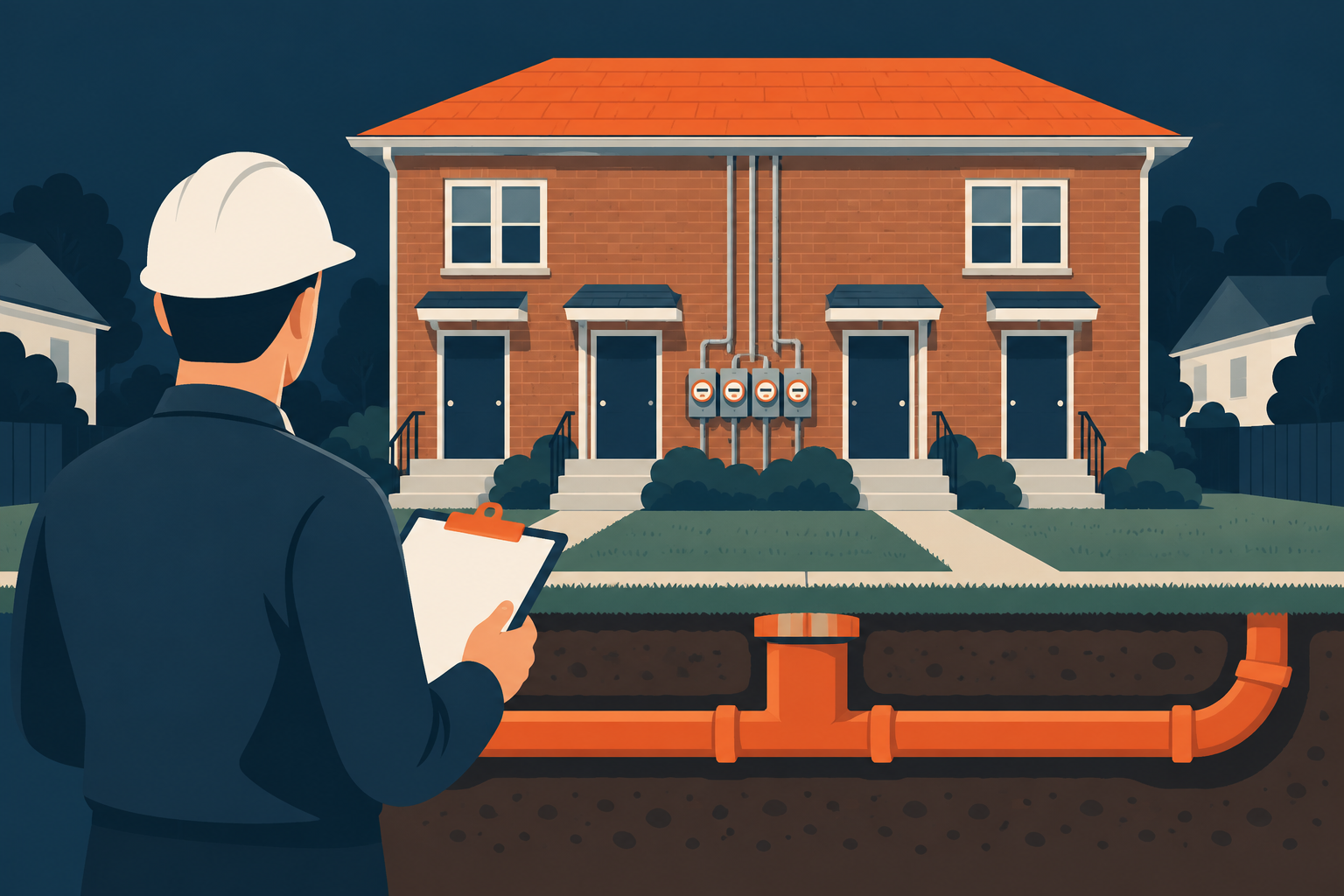
Before buying a multifamily property, run 9 checks: confirm which loan world the unit count puts you in (1-4 units residential, 5+ commercial), verify the rent roll, T-12, and leases against real documents, rebuild NOI and DSCR yourself, and price the roof, sewer, insurance, local rules, and reserves before you commit. In my experience, the expensive small-multifamily mistakes come from trusting the seller's pro forma.
I have spent more than 18 years in real estate and have focused on short-term rentals since 2016. The buyers who get hurt on small multifamily usually did not overpay by much on paper. They paid a fair price for income that did not exist, or for a building whose sewer line, roof, or zoning status turned the first two years of cash flow into repairs. Below is the pre-purchase checklist I would hand a new investor looking at a duplex, fourplex, or small 5-plus-unit building.
Last updated: September 2026.
Check 1: Know Which Loan World the Unit Count Puts You In
The unit count decides what kind of loan you can get and how the lender judges the deal.
Properties with 1 to 4 units are financed as residential real estate. According to HUD's page on the FHA 203(b) program, eligible properties are one-to-four unit structures, the loan must be for a principal residence, and the borrower can get approximately 96.5% financing. That is why "house hacking" a duplex or fourplex is so common: you live in one unit, rent the others, and buy with a small down payment. The catch is the occupancy requirement. If you have no plan to live there, FHA is not your path, and you are looking at conventional investor loans or DSCR loans instead.
Properties with 5 or more units are commercial real estate. The lender cares much less about your W-2 income and much more about whether the building's net operating income covers the debt. The appraisal leans on the income approach, so a building with weak or unverified income appraises lower no matter how nice the finishes are.
Here is how the two worlds compare for a small investor.
Factor | 2-4 Units | 5+ Units |
|---|
Loan type | Residential: FHA (owner-occupied), conventional, DSCR | Commercial: bank, agency, or portfolio loans |
Underwriting basis | Borrower income, credit, and debt-to-income ratio, plus rental income | Property NOI and debt service coverage ratio |
Valuation method | Mostly comparable sales | Mostly income approach (NOI and cap rate) |
Owner-occupancy option | Yes, FHA 203(b) for a principal residence | Generally no low-down-payment owner-occupant path |
Typical buyer | First-time investor, house hacker, small landlord | Investor with a track record, partners, or syndicators |
On the residential side, the Consumer Financial Protection Bureau explains that lenders use your debt-to-income ratio, meaning your monthly debt payments divided by your gross monthly income, to judge whether you can take on a new loan. Every rental you add with a personal mortgage changes that ratio. If you plan to grow past a few properties, map out now how you will move from residential to commercial financing. Our guide on the fourplex-to-multifamily transition covers that jump in detail. This page stays focused on what to verify before you buy any single deal.
I am not quoting interest rates here on purpose. They move weekly and vary by lender, credit, and property. Get two or three written quotes during your first week under contract and plug the actual payment into your analysis.
Checks 2-4: Verify the Rent Roll, T-12, Leases, and Estoppels
Treat seller financials as a sales document until you have matched them to paper. Your job during due diligence is to tie every income number to a piece of paper.
Check 2: Match the rent roll to the leases. The rent roll lists each unit, the tenant, monthly rent, deposit, lease start and end dates, and any balance owed. Ask for copies of every signed lease and compare line by line. Watch for these gaps:
Rent on the roll that is higher than rent on the lease
Leases that expired months ago with the tenant now month-to-month
Security deposits listed on the roll that the seller cannot show in a bank account
Concessions, free months, or side deals that do not appear on either document
Units listed as occupied that are occupied by a relative, the manager, or nobody
Check 3: Tie the T-12 to bank deposits. The T-12 is the trailing twelve months of actual income and expenses. Ask for it month by month, not as a single annual total. Then ask for twelve months of bank statements for the property account and confirm that deposits match reported rent. If the seller reports $6,000 a month in rent and the deposits average $5,200, the $800 difference is either late payers, cash rent you cannot verify, or income that is not there. Also compare the T-12 to Schedule E from the seller's tax return if they will provide it.
Check 4: Get tenant estoppel certificates. An estoppel is a short signed statement from each tenant confirming their rent, deposit, lease term, and any promises the landlord made. It is your protection against the tenant who later claims the seller promised a new kitchen, a reduced rent, or the return of a deposit you never received. Put estoppels in the purchase contract as a condition of closing.
Tenants in place come with the building. You inherit their leases, their deposits, their payment history, and any disputes. If a unit is below market, you usually cannot raise rent until the lease ends, and in some cities you cannot raise it much even then. If a tenant is behind on rent, eviction timelines and costs depend on state law. Underwrite the current leases as they are, and treat any increase as upside that has to wait for lease expiration.
Check 5: Rebuild the Numbers Yourself: NOI, Cap Rate, Cash-on-Cash, DSCR
Once the income is verified, rebuild the operating statement from scratch. Four numbers matter:
Net operating income (NOI): effective gross income minus operating expenses, before any mortgage payment.
Cap rate: NOI divided by purchase price. It describes the building's return with no debt.
Cash-on-cash return (CoC): annual cash flow after debt service divided by the cash you put in.
Debt service coverage ratio (DSCR): NOI divided by annual debt service. Commercial and DSCR lenders set a minimum, so ask each lender for theirs.
The table below walks an illustrative fourplex through every step. The rents, expenses, price, and loan payment are made up for teaching purposes. Swap in your own verified figures.
Line item (illustrative fourplex, annual) | Amount | How it is calculated |
|---|
Gross scheduled rent | $72,000 | 4 units x $1,500 x 12 months |
Vacancy and credit loss (5%) | -$3,600 | $72,000 x 5% |
Effective gross income (EGI) | $68,400 | $72,000 - $3,600 |
Property taxes | -$7,200 | From county tax record, reassessed at your price |
Insurance | -$3,600 | Written quote, not the seller's policy |
Water, sewer, trash (owner-paid) | -$3,000 | From 12 months of utility bills |
Repairs and maintenance | -$4,800 | $1,200 per unit |
Property management (8% of EGI) | -$5,472 | $68,400 x 8% |
Capital reserves | -$3,000 | $750 per unit |
Admin, landscaping, misc. | -$1,200 | Estimate |
Total operating expenses | -$28,272 | Sum of the seven lines above |
Net operating income (NOI) | $40,128 | $68,400 - $28,272 |
Annual debt service | -$35,400 | Illustrative $2,950 monthly payment on a $450,000 loan |
Annual cash flow | $4,728 | $40,128 - $35,400 |
Cap rate at $600,000 price | 6.69% | $40,128 / $600,000 |
Cash invested | $162,000 | $150,000 down (25%) + $12,000 closing costs |
Cash-on-cash return | 2.92% | $4,728 / $162,000 |
DSCR | 1.13 | $40,128 / $35,400 |
Now compare that to what a typical seller pro forma might show for the same building. If the seller lists zero vacancy, self-management, and no reserves, their income stays at the full $72,000, their expenses drop to $19,800 and their NOI rises to $52,200 ($72,000 minus $19,800). At a $600,000 price, that reads as an 8.7% cap rate. Your rebuilt version is 6.69%. Same building and same rents. The roughly two-point gap comes from three line items the seller left out: vacancy, management, and reserves.
The DSCR line matters most. If a lender requires 1.25, the maximum annual debt service this NOI supports is $32,102 ($40,128 / 1.25). The illustrative payment of $35,400 does not fit, so you would need a bigger down payment, a lower price, or verified higher income. Find that out before the appraisal, not after.
Run the expense ratio sanity check. Divide total operating expenses by EGI. In the example, $28,272 / $68,400 = 41.3%. I am not going to tell you a "correct" ratio, because it swings with who pays utilities, local tax rates, the age of the building, and whether you self-manage. Use it as a comparison tool instead. If the seller's statement shows a ratio far below yours, find the missing lines. The usual suspects are management, reserves, repairs deferred for years, and utilities the seller paid personally and never put on the books.
For a longer walk-through of each input, our rental property cash flow calculator guide breaks down the formulas.
Check 6: Inspect the Systems That Break Small-Multifamily Budgets
On a multifamily building, a few items can each wipe out years of cash flow. In the example above, annual cash flow is $4,728, and a single major replacement can exceed that.
Get specialist eyes on these:
Roof: age, number of layers, flashing, and signs of past leaks in top-floor units. Ask for the permit history.
HVAC and water heaters: age and condition of each unit's system. Four aging furnaces on a fourplex can mean four replacements in a short window.
Sewer lateral: pay for a camera scope of the line from the building to the street. Older clay or cast iron lines crack and root over, and the owner usually pays for the section on private property.
Electrical: panel capacity, outdated wiring, and whether each unit has its own panel.
Separate meters: confirm whether gas, electric, and water are metered per unit. If they are not, you pay those bills, and they belong in your operating expenses.
Foundation, drainage, and moisture: basements and crawlspaces in older buildings.
Life safety: smoke and carbon monoxide detectors, egress windows, fire separation between units, as your local code requires.
Walk every unit, not just the vacant one. If a tenant refuses access, make it a contract condition. Then turn the inspection findings into a price or credit request with written contractor quotes attached.
Check 7: Local Rules, Licensing, and STR or MTR Limits by City
Two identical fourplexes in neighboring cities can be completely different investments because of local rules. Check these with the city and county before you remove contingencies:
Rent control or rent stabilization: limits on annual increases, and sometimes on which tenants you can decline to renew.
Rental licensing and inspections: many cities require a rental license or registration and a periodic inspection. Some will not issue a license until code violations are fixed.
Zoning and legal unit count: confirm the building is legally a fourplex, not a legal duplex with two unpermitted units. Unpermitted units can mean lost income and a lender who will not count them.
Short-term and mid-term rental rules: if you plan to run one unit as an Airbnb or a furnished 30-plus-day rental, check whether the city allows it, whether it needs a permit, whether it caps permits, and whether the rule depends on owner occupancy. STR rules change by city and sometimes by neighborhood.
Tenant relocation or just-cause rules: some cities require relocation payments or specific legal reasons before you can end a tenancy to convert a unit.
For STR operators, this is the check that decides whether a small multifamily purchase works at all. A fourplex where you live in one unit, rent two long-term, and run one as a short-term rental can be a strong setup, but only where that use is legal. Our short-term rental legal requirements guide covers how to verify permits, taxes, and HOA restrictions before you count STR income in your analysis.
Checks 8-9: Insurance, Depreciation, and Reserves
Check 8: Get a real insurance quote during due diligence. Do not plug in the seller's premium. Their policy may be old, carry a high deductible, or not match how you plan to operate. Ask your agent to quote the building at your intended use, including liability limits, loss of rents coverage, and any flood or wind coverage your lender will require. If one unit will be a short-term rental, tell the agent. Many standard landlord policies do not cover transient guests.
Check 9: Plan your reserves and your tax picture before closing. Reserves are cash you set aside at closing, separate from your down payment, for vacancies, repairs, and the big-ticket items the inspection found. Set your own target based on the age of the systems and how many months of expenses you want to cover.
On taxes, IRS Publication 527 lists residential rental buildings and their structural components, such as furnaces and water pipes, with a 27.5-year recovery period under the General Depreciation System. Land is not depreciable, so only the building portion of your price counts. IRS Publication 946 adds a detail STR operators should read closely: a building counts as residential rental property if 80% or more of its gross rental income is from dwelling units, and a dwelling unit does not include a unit in a hotel, motel, or other establishment where more than half the units are used on a transient basis. If you plan to run several units as short-term rentals, talk to a CPA before you buy about how that affects depreciation and reporting. Our guide to financing a short-term rental covers the loan side of that same plan.
Back to the vacancy line from Check 5: the Census Bureau's Housing Vacancies and Homeownership survey publishes rental vacancy rates every quarter. It is a national and regional number, so use it as context, then confirm vacancy locally with property managers and current listings.
Multifamily Due Diligence Checklist: All 9 Checks
Use this list in order during your contract period.
Confirm the loan path. Count the units, decide whether you will live there, and get written quotes for the loan type that fits (FHA, conventional, DSCR, or commercial).
Match the rent roll to every signed lease. Flag expired leases, concessions, and deposits you cannot verify.
Tie the monthly T-12 to twelve months of bank deposits and, if possible, the seller's Schedule E.
Collect signed estoppel certificates from every tenant as a condition of closing.
Rebuild NOI, cap rate, cash-on-cash, and DSCR with your own vacancy, management, reserves, and insurance numbers. Run the expense ratio and compare it to the seller's.
Inspect the building systems: roof, HVAC, water heaters, sewer lateral scope, electrical, meters, and every unit.
Verify local rules: legal unit count, rental licensing, rent control, and STR or MTR permits for the use you plan.
Get a written insurance quote for your intended use, including short-term rental coverage if needed.
Set your reserves and tax plan, including the building-versus-land split for depreciation, and review it with a CPA.
If any step changes the numbers, renegotiate or walk. Walking away during the inspection period costs you the inspection fees. Buying the wrong building can tie up your cash flow for years.
If you want a second set of eyes on a deal before you commit, book a complimentary one-on-one diagnostic call. We look at where your plan stands, and if you want a written roadmap afterward, that is the $997 action plan.
Frequently Asked Questions
Can I use an FHA loan to buy a fourplex?
Yes, if you will live in one of the units as your principal residence. HUD's 203(b) page lists one-to-four unit structures as eligible and describes financing of approximately 96.5%. You still need to meet FHA credit qualifications and your area's mortgage limits.
What is the difference between a 4-unit and a 5-unit property for financing?
A property with 1 to 4 units is financed with residential loans, where the lender weighs your personal income, credit, and debt-to-income ratio. At 5 units and above, it becomes a commercial loan, and the lender focuses on the building's NOI and DSCR. The appraisal also shifts toward the income approach.
What DSCR do lenders require on a small multifamily property?
It depends on the lender and loan program, so ask each lender for their minimum in writing. As a rule of thumb, divide NOI by the lender's minimum to find the most annual debt service the building can carry. Run your numbers against the actual requirement before you order an appraisal.
What documents should I request from the seller?
Ask for the current rent roll, every signed lease, a month-by-month T-12, twelve months of bank statements, utility bills, the tax bill, the current insurance policy, and any service contracts. Add tenant estoppel certificates as a closing condition. Request permit history for the roof and major systems.
Can I run a short-term rental in one unit of a multifamily property?
Only where local law allows it. Many cities require a permit, cap the number of permits, or allow STRs only in owner-occupied buildings. Verify the rule with the city before you count any STR income, and tell your insurance agent about the planned use.
How long do I depreciate a multifamily rental building?
IRS Publication 527 lists residential rental buildings with a 27.5-year recovery period under the General Depreciation System, and land cannot be depreciated. If a large share of your units will be rented on a transient basis, review IRS Publication 946's definition of residential rental property with a CPA. Tax treatment for mixed long-term and short-term use can differ.
Sources
Related Reading